Every growing business eventually reaches the same point: the servers in the office or the data centre rack can no longer keep up. Traffic spikes during a campaign, a new application needs more storage, or a customer asks about disaster recovery, and the answer is hardware that takes weeks to buy and install.
Amazon Web Services (AWS) was built to remove that constraint. This guide explains what AWS is, how it works, which services matter most, and how businesses in India can adopt it without taking on unnecessary complexity or cost.
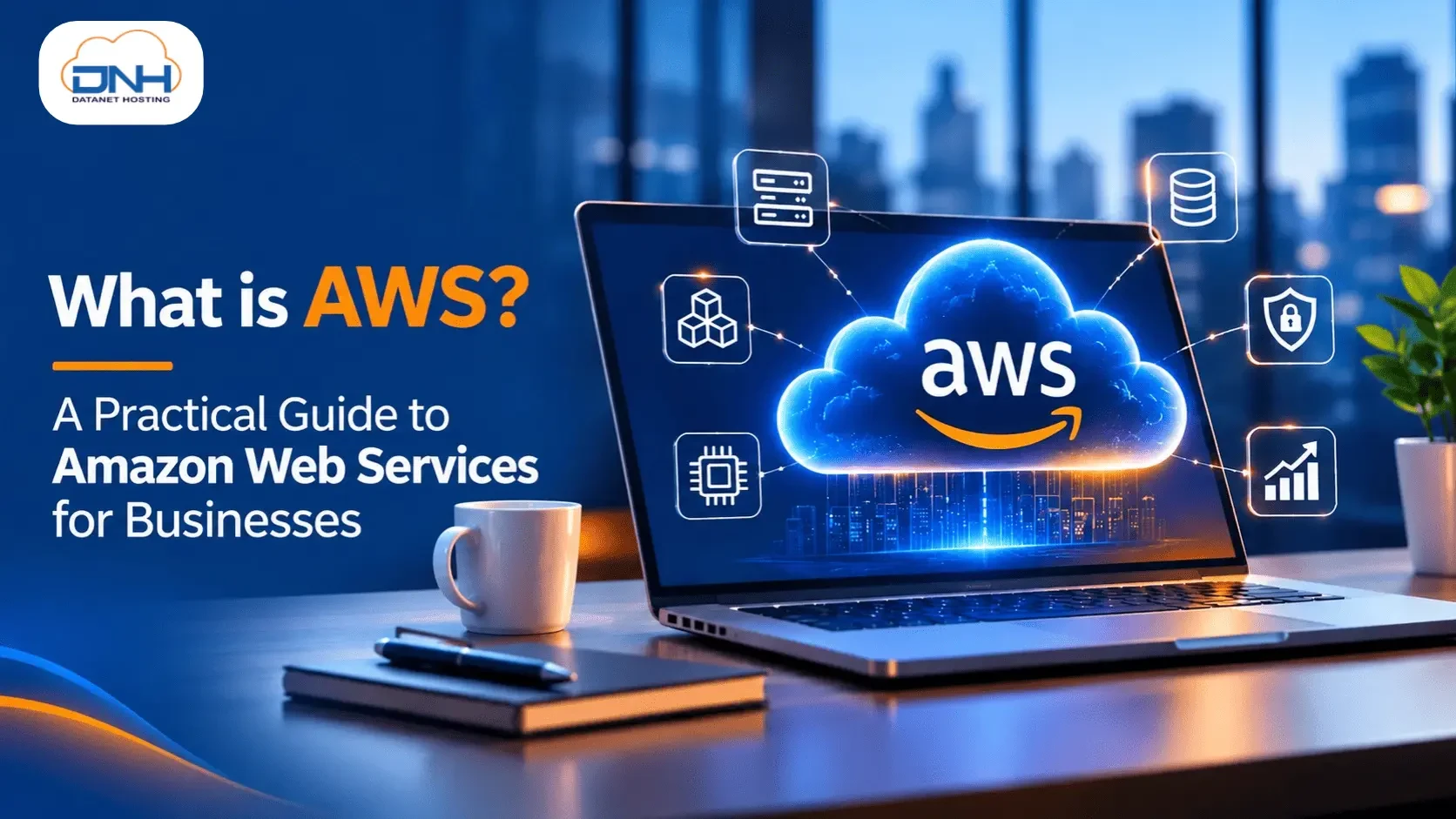
Amazon Web Services is a cloud computing platform from Amazon that provides IT infrastructure and software services over the internet. Instead of buying and maintaining physical servers, an organisation rents the computing power, storage, databases and networking it needs and pays for what it consumes.
AWS offers more than 200 services, covering everything from virtual servers and file storage to databases, security tooling, analytics, containers and serverless computing. Startups, mid-sized companies and large enterprises run workloads on it, from a single website to complex, multi-region business applications.
Understanding four basic ideas makes the platform far easier to evaluate.
Regions and Availability Zones. AWS organises its infrastructure into geographic Regions, and each Region contains multiple isolated Availability Zones. For Indian businesses, the Mumbai (ap-south-1) and Hyderabad (ap-south-2) Regions allow workloads to run close to users and support data-residency and recovery planning.
On-demand provisioning. Resources can be created in minutes and removed when no longer needed. There is no procurement cycle and no idle hardware sitting in a rack.
Pay-as-you-go pricing. Customers are billed for what they use, with commitment-based options such as Savings Plans and Reserved Instances available for steady workloads.
Shared responsibility. AWS secures the underlying cloud infrastructure. The customer remains responsible for how services are configured, who has access, and how data is protected. This is where many businesses benefit from an experienced implementation partner.
AWS is large, but most business workloads rely on a handful of service categories.
Amazon EC2 provides configurable virtual servers for websites, applications, databases and enterprise workloads. Auto Scaling adds or removes instances automatically as demand changes, so capacity follows traffic instead of being sized for the busiest day of the year.
Explore how we plan instance sizing, scaling policies and load balancing in our AWS EC2 and Auto Scaling services.
Amazon S3 stores objects such as files, media, backups and logs. Amazon EBS provides block volumes attached to EC2 instances, and S3 Glacier storage classes keep rarely accessed data at a lower cost. Choosing the right tier and lifecycle policy has a direct effect on both performance and the monthly bill.
See how storage is designed around access patterns and retention on our AWS cloud storage .
Amazon RDS runs managed relational database engines, which reduces routine administration such as patching and backups. Amazon DynamoDB is a managed NoSQL database suited to key-value and document workloads that need to scale. The right choice depends on your data model, query patterns and availability requirements.
Our team can help you select and configure the right option through our AWS cloud database services.
AWS provides identity and access management, encryption, network isolation, logging and monitoring tools. Used correctly, they give businesses a strong security posture. Used carelessly, a single misconfigured permission can expose data. Security design should therefore start on day one, not after launch.
Learn more about governance, access control and monitoring in our AWS cloud security services.
AWS Lambda runs code in response to events without requiring you to manage servers. You pay only for the compute time consumed, which makes it a good fit for APIs, automation, event processing and background tasks.
Discover practical serverless architectures through our AWS Lambda and serverless services.
Moving existing applications to AWS requires discovery, dependency mapping, a strategy for each workload (rehost, replatform or refactor), testing and a controlled cutover. A phased plan keeps risk low and downtime short.
Read about our approach on the AWS cloud migration services .
AWS rewards good planning and penalises guesswork. The most frequent issues are these:
A managed AWS partner can take on these tasks, with monitoring, patching, backup coordination and cost reviews handled as part of ongoing operations.
AWS can support different workloads depending on business and technical requirements:
Datanet Hosting Solutions supports businesses across the full AWS lifecycle, from the first assessment to day-to-day operations:
Managed service scope is agreed around workload size, AWS services, support coverage and operational requirements. AWS consumption charges are separate from managed service fees.
You can see the full range of capabilities on our Amazon AWS cloud services .
What does AWS stand for?
AWS stands for Amazon Web Services, the cloud computing platform operated by Amazon.
Is AWS only for large enterprises?
No. Because resources are billed on usage, startups and growing businesses can begin with a small environment and expand as requirements change.
Which AWS Regions serve India?
AWS operates Regions in Mumbai (ap-south-1) and Hyderabad (ap-south-2), which can be used for production workloads, regional placement and recovery planning.
Do I need an expert to use AWS?
You can start on your own, but production environments benefit from professional architecture, security configuration and cost management, particularly for business-critical systems.
How is AWS billed?
Charges depend on the services and resources you use. Commitment-based options are available for predictable workloads. Managed service fees from a partner are agreed separately.
Can existing applications be moved to AWS?
Yes. A structured migration covers discovery, strategy selection, validation and cutover, and can be carried out in phases to reduce risk.
AWS gives businesses access to enterprise-grade infrastructure without the cost and delay of owning hardware. The platform is powerful, but its value depends on how well it is designed, secured and managed. Starting with the right architecture, and reviewing it regularly, is what turns cloud adoption into a lasting advantage.
Planning an AWS project? Talk to the Datanet Hosting Solutions team about migration, managed services or an architecture review. Explore our AWS cloud services or contact our experts to get started.