Email remains one of the most important communication tools for modern businesses. From sharing confidential documents to managing internal operations, organisations depend on platforms like Microsoft Outlook every day. However, a newly exploited security vulnerability highlights how even trusted business applications can become potential entry points for cyberattacks.
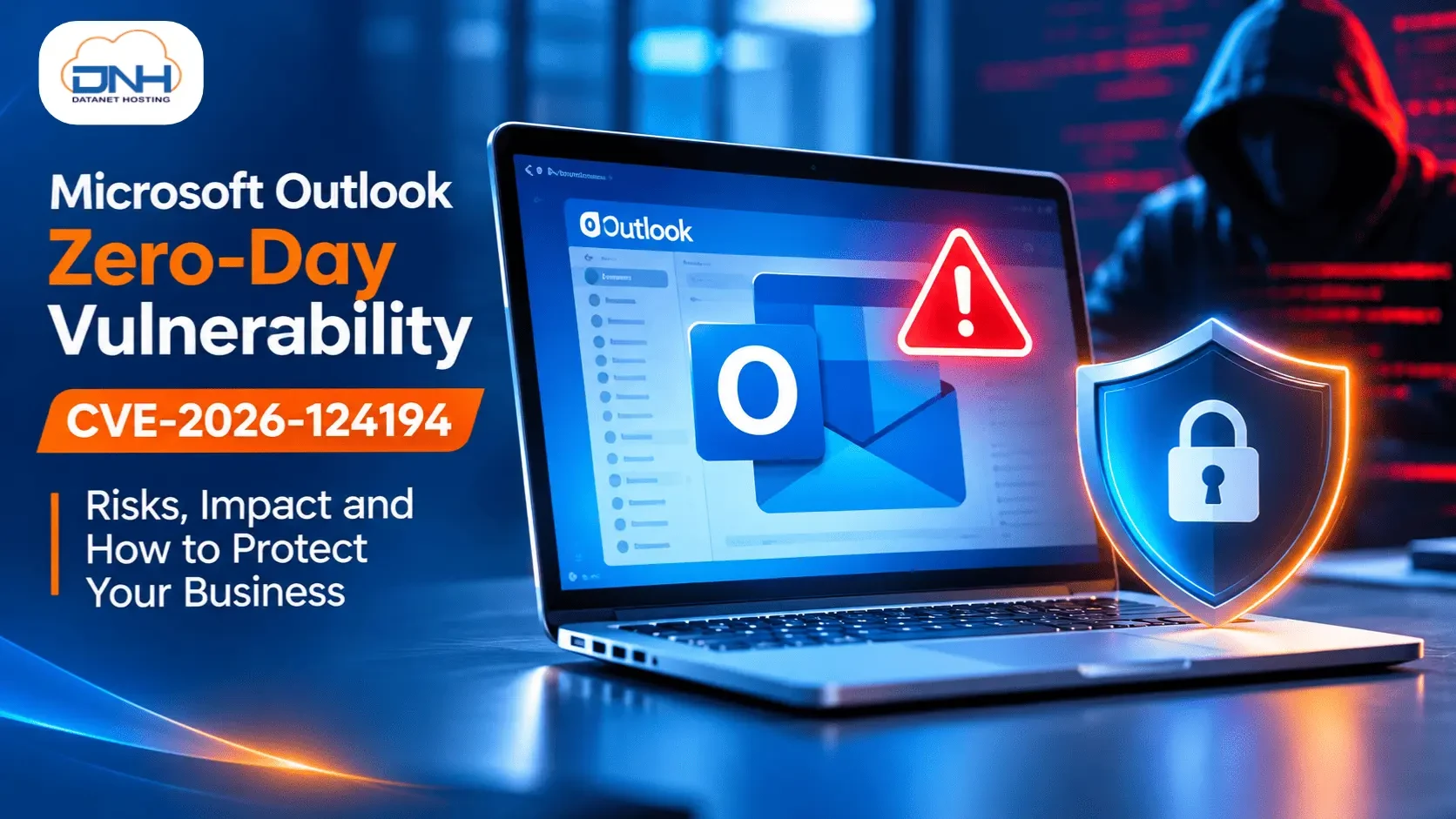
Microsoft has confirmed active exploitation of a zero-day vulnerability in Outlook, tracked as CVE-2026-124194. The flaw could expose users' Windows authentication information when they open a specially crafted malicious message file.
Microsoft released a security update on November 10, 2026, and classified the vulnerability as a spoofing issue with a CVSS 3.1 score of 6.5 (Moderate). Its exploitation status is marked as "Exploitation Detected".
For organisations using Microsoft 365 Apps for Enterprise and supported Office LTSC versions, this development is an important reminder to review security updates, authentication policies and endpoint protection measures.
In this article, we explain how the vulnerability works, why businesses should take it seriously and what organisations can do to strengthen their cybersecurity posture.
CVE-2026-124194 is a Microsoft Outlook spoofing vulnerability that occurs because the application does not properly warn users before performing a potentially unsafe action.
An attacker can send a specially crafted message file and convince a recipient to open it in an affected version of Outlook. Once opened, Outlook may connect to an attacker-controlled network location without displaying the usual external-content warning.
During this connection, the application could expose the user's NTLMv2 authentication hash.
This information may potentially be abused to impersonate the affected user or attempt unauthorised access to systems that rely on NTLM authentication.
According to Microsoft's official advisory, successful exploitation requires user interaction and network connectivity. The vulnerability is not classified as a remote code execution (RCE) flaw.
Official reference: Microsoft Security Update Guide – CVE-2026-124194.
The vulnerability demonstrates how a seemingly ordinary email attachment or message file can create a security risk.
The attack generally involves the following steps:
An attacker sends a specially crafted message file to a targeted employee or business user. The message may be designed to encourage the recipient to open it.
The attack requires the recipient to open the malicious file in an affected Outlook version. Simply receiving the email is not sufficient.
When the file is opened, Outlook may initiate a connection to an attacker-controlled network location without showing the expected external-content warning.
The connection can disclose the user's NTLMv2 authentication hash to the attacker.
An attacker may attempt to use the captured authentication material to impersonate the user or gain unauthorised access to services that accept the compromised authentication.
Important: Microsoft has confirmed exploitation but has not publicly detailed the attackers, affected organisations or the scale of the attacks.
The vulnerability is particularly relevant to organisations that rely on Outlook for internal and external communication.
Even though Microsoft rates the vulnerability as Moderate, its confirmed exploitation status makes timely remediation important.
Here are some potential business risks:
Compromised authentication information can create additional identity-security risks. If attackers successfully abuse captured credentials, they may attempt to access business systems and resources.
Many organisations operate interconnected environments involving email platforms, file servers, internal applications and cloud infrastructure.
An identity-related compromise can increase the risk of unauthorised access across these connected systems, depending on the organisation's authentication controls.
If an attacker successfully impersonates an employee, sensitive business information may become accessible through systems that trust the compromised identity.
Organisations may need to investigate suspicious authentication activity, review access permissions, assess potential exposure and meet applicable incident-reporting obligations.
The impact will depend on the organisation's infrastructure, authentication configuration and existing security controls.
Microsoft's advisory identifies the following affected products:
Microsoft 365 Apps for Enterprise
Microsoft Office LTSC 2021
Microsoft Office LTSC 2024
Both 32-bit and 64-bit installations are covered in the reported affected product configurations.
Microsoft released the relevant security updates on November 10, 2026.
Organisations should consult Microsoft's official security advisory and Office security release information to identify the correct update for their product and servicing channel.
Note: Do not assume that every Outlook installation is affected in the same way. Verify the installed product version and update status before determining exposure.
Organisations should treat this vulnerability as a priority security update, particularly because exploitation has already been detected.
The following measures can help reduce exposure.
Apply Microsoft's November 2026 security updates to affected Office installations.
IT administrators should:
Identify all affected Outlook installations.
Deploy the relevant security updates.
Verify installed versions and build numbers.
Confirm that updates have been successfully applied.
Review systems that may have missed scheduled updates.
Avoid postponing security patches until the next routine maintenance cycle.
Review where NTLM authentication is still required within your organisation.
Where operationally possible:
Restrict unnecessary outbound NTLM authentication.
Review NTLM audit logs.
Apply appropriate network authentication policies.
Consider stronger modern authentication mechanisms where supported.
These measures can reduce the potential impact of authentication-related attacks.
Security teams should review unusual outbound network activity, especially unexpected SMB connections to unfamiliar external destinations.
Monitor for:
Unusual authentication attempts.
Unexpected outbound SMB traffic.
Suspicious Outlook network activity.
Unfamiliar external destinations.
Unusual account access patterns.
Correlating endpoint, network and identity logs can help security teams investigate suspicious behaviour more effectively.
Endpoint security solutions can help organisations identify suspicious activity across employee devices and servers.
Consider deploying appropriate:
Endpoint Detection and Response (EDR).
Advanced malware protection.
Centralised security monitoring.
Threat detection and incident response processes.
Technology alone cannot eliminate every security risk.
Employees should be encouraged to:
Avoid opening unexpected message files.
Verify unusual requests with the sender.
Report suspicious attachments to IT teams.
Follow company security policies.
Avoid downloading files from untrusted sources.
Security awareness training should be an ongoing part of an organisation's cybersecurity strategy.
The Outlook zero-day incident is another example of why cybersecurity should not be limited to installing antivirus software or maintaining a firewall.
Modern organisations need a broader security approach that protects users, devices, networks, applications, identities and business data.
A comprehensive cybersecurity strategy should include:
Combining these controls with regular security assessments and timely patch management can help businesses build a more resilient IT environment.
Cybersecurity requires continuous attention, the right technology and a proactive approach to infrastructure management.
At Datanet Hosting, businesses can explore IT infrastructure, cybersecurity and managed services designed to support their operational and security requirements.
Our solutions can help organisations strengthen their technology environments through:
Explore security technologies and solutions designed to help protect business networks, endpoints and digital assets.
Strengthen network infrastructure with security solutions that support traffic monitoring, access control and threat prevention.
Get professional assistance with IT infrastructure management, system administration and operational support.
Build a recovery strategy to help protect critical business information and maintain operational continuity during unexpected incidents.
Choose suitable cloud and hosting infrastructure to support business applications, workloads and digital operations.
Whether your organisation needs stronger network security, managed infrastructure, endpoint protection or backup solutions, having the right technology partner can make a difference.
Explore Datanet Hosting's Cybersecurity Solutions and speak with our team about your business requirements.
The Microsoft Outlook zero-day vulnerability CVE-2026-124194 is a timely reminder that trusted business applications can also introduce security risks.
Although the vulnerability requires user interaction, Microsoft has confirmed active exploitation and released a security update.
Businesses should prioritise patch management, review authentication policies, monitor suspicious network activity and strengthen endpoint and network security.
Most importantly, organisations should move beyond reactive security measures and adopt a proactive cybersecurity strategy.
Need help strengthening your IT infrastructure and cybersecurity posture?
Connect with Datanet Hosting to explore cybersecurity, managed IT and infrastructure solutions for your business.
CVE-2026-124194 is a Microsoft Outlook spoofing vulnerability that can expose a user's NTLMv2 authentication hash when a specially crafted message file is opened in an affected Outlook version.
Yes. Microsoft has marked CVE-2026-124194 as "Exploitation Detected" in its November 10, 2026 security advisory.
No. Microsoft classifies this issue as a spoofing vulnerability, not a remote code execution vulnerability. Its primary security concern is the potential exposure of NTLMv2 authentication information.
No. Microsoft has explicitly stated that the Preview Pane is not an attack vector for CVE-2026-124194. The attack requires the user to open a specially crafted file.
Businesses should install the relevant November 2026 Microsoft security updates, review outbound NTLM authentication, monitor suspicious network activity and strengthen endpoint and identity security controls.
Microsoft 365 supports critical business communication and collaboration. Protecting these environments requires regular updates, strong identity controls, endpoint protection, security monitoring and employee awareness.
Yes. Managed IT services can support infrastructure monitoring, security administration, patch management, backup planning and ongoing IT operations. The actual protection depends on the services, technologies and security scope implemented.